Cookie Preferences
By clicking, you agree to store cookies on your device to enhance navigation, analyze usage, and support marketing.
Thank you! Your submission has been received!
Oops! Something went wrong while submitting the form.

.svg)

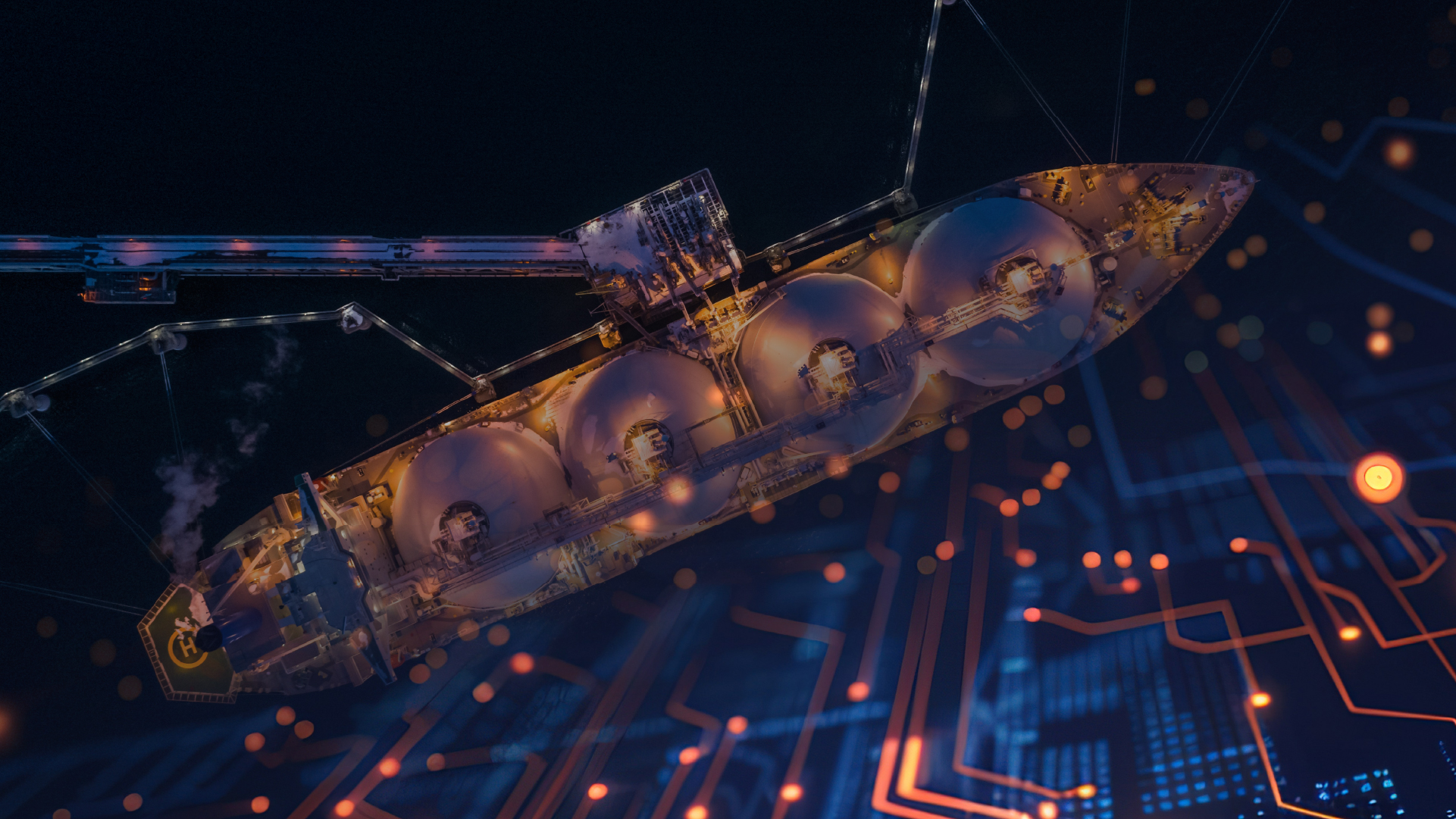
Reliability has always been an operational priority for LNG producers, but the stakes have shifted. As new supplies enter the market, commercial flexibility increases, and LNG becomes a stabilizing force in global energy systems, reliability is no longer just an internal performance target. It is now the deciding factor in long-term competitiveness.
The coming decade will reward operators who can deliver stable, predictable, and efficient production, even when market conditions move quickly. The challenge is that plants are operating under tighter constraints, variable feed gas conditions, aging assets, and more demanding commercial structures. Traditional decision making and manual troubleshooting cannot keep up with the scale and pace of today’s operations.
Reliability has become the new frontier of LNG leadership. Industrial AI is the shift that makes this possible.
The global LNG ecosystem is entering a period of expanded supply capacity. According to the IEA, nearly 300 bcm of new LNG export capability is set to come online by 2030, mainly from the US and Qatar. This expansion will reshape trade flows and add downward pressure to long term prices.
However, this increased supply also intensifies competition. Buyers expect steady delivery. Governments depend on LNG for grid resilience. Flexible contract structures demand operational agility. Reliability becomes the foundation for margin protection, customer confidence, and long-term positioning.
Operators who can guarantee consistent output will outperform those who cannot.
Reliability is under pressure from multiple angles.
1. Feed gas variability and system complexity
Plants face unpredictable inlet conditions, temperature shifts, compressor challenges, and other factors that impact stability.
2. Workforce gaps and knowledge erosion
Much of the sector’s operational expertise has retired or is close to retirement. New engineers inherit complex systems that require years of tacit knowledge to master.
3. Market volatility and commercial exposure
As LNG becomes a core element of national energy security strategies, even minor disruptions have wider consequences.
4. Asset aging and maintenance demands
Infrastructure built decades ago is experiencing increased operational stress, making proactive detection essential.
This is a level of complexity that outpaces manual analysis and traditional plant management systems.
Industrial AI changes how reliability is built, maintained, and scaled across the LNG value chain. It introduces a layer of intelligence that supports consistent, high-performance operations even when conditions shift faster than teams can react.
AI identifies early signs of degradation, process drift, and abnormal behavior long before alarms trigger or operational limits are reached. This moves reliability from reactive protection to proactive control.
Decision quality becomes more consistent. AI captures the expertise of senior engineers, making it accessible and actionable for every shift and every team.
This is especially valuable for operations that run 24 hours with rotating staff.
LNG plants contain thousands of interdependent parameters. AI reasons through these interactions to provide recommendations that align engineering logic with real time plant conditions.
When disruptions occur, response time matters. AI gives operators contextual recommendations and corrective pathways to stabilize the system faster and with more confidence.
Reliability and efficiency go hand in hand. AI can identify the lowest energy pathway to maintain throughput, improving cost performance while supporting stability.
The LNG market is not becoming simpler. It is becoming smarter, more dynamic, and more commercially exposed. Operators that continue to rely solely on traditional methods will face growing operational and competitive challenges.
The industry is already shifting. Industrial AI is being deployed to:
• Support decision making during plant upsets
• Reduce troubleshooting time
• Optimize loading and scheduling
• Improve machinery health and asset up time
• Maintain stable liquefaction performance under variable conditions
• Capture institutional knowledge and turn it into consistent operational logic
Beyond AI is shaping this next step in LNG reliability. Our industrial AI is engineered for complex, high-streak environments where reliability directly affects commercial performance and national energy stability.
The companies that invest in intelligent reliability today will set the standard for LNG operations in 2030 and beyond.